
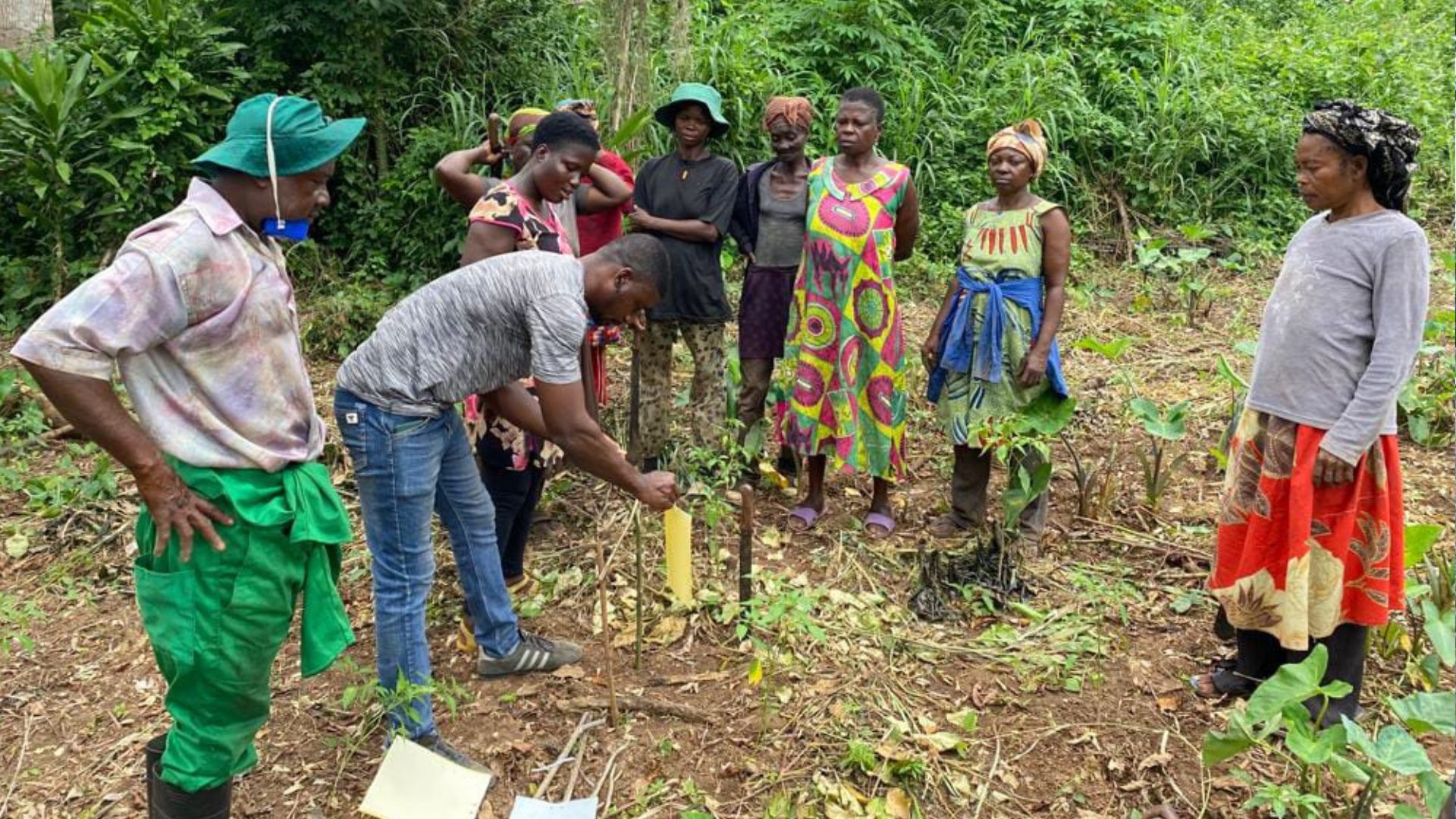
Our approach, drawing on our work with Newmont Africa in Ghana
Charity and philanthropy do brilliant work and change lives every day. We believe enterprise can take that work further and keep it going.
This is where we come in. We work alongside funders and charities to set up businesses that can fund themselves. When people earn their own money through a business that works, the benefits keep growing long after the original funding has been spent.
We saw this in Ghana, where we worked with Newmont Africa (through the Newmont Ahafo Development Foundation, NADeF) and partners to restart a food processing centre. For the communities around Newmont’s operations, that meant about 1,000 farmers with a reliable buyer for their crops, average incomes up by 15% in the first year, and 25 full-time and 10 seasonal jobs at the centre. Because the business earns its own money, that income can carry on beyond the life of the mine.
Here is what we did together, and why we think it worked.
Newmont Africa wanted to leave a lasting economic legacy for 34 mining communities in Ghana. We worked with Newmont Africa and partners including Innovest Advisory, Injaro Investments and GIZ to restart the Asutifi Processing and Services Centre (APSC). It is a factory that makes chilli and ginger products.
At the centre of the plan was an out-grower scheme. Farmers grow crops under contract and sell them to the factory.
By 2025, the centre had annual revenues above US$1 million. It runs independently and reinvests its profits. About 1,000 farmers were contracted, and farmer incomes rose by about 15% in the first year.
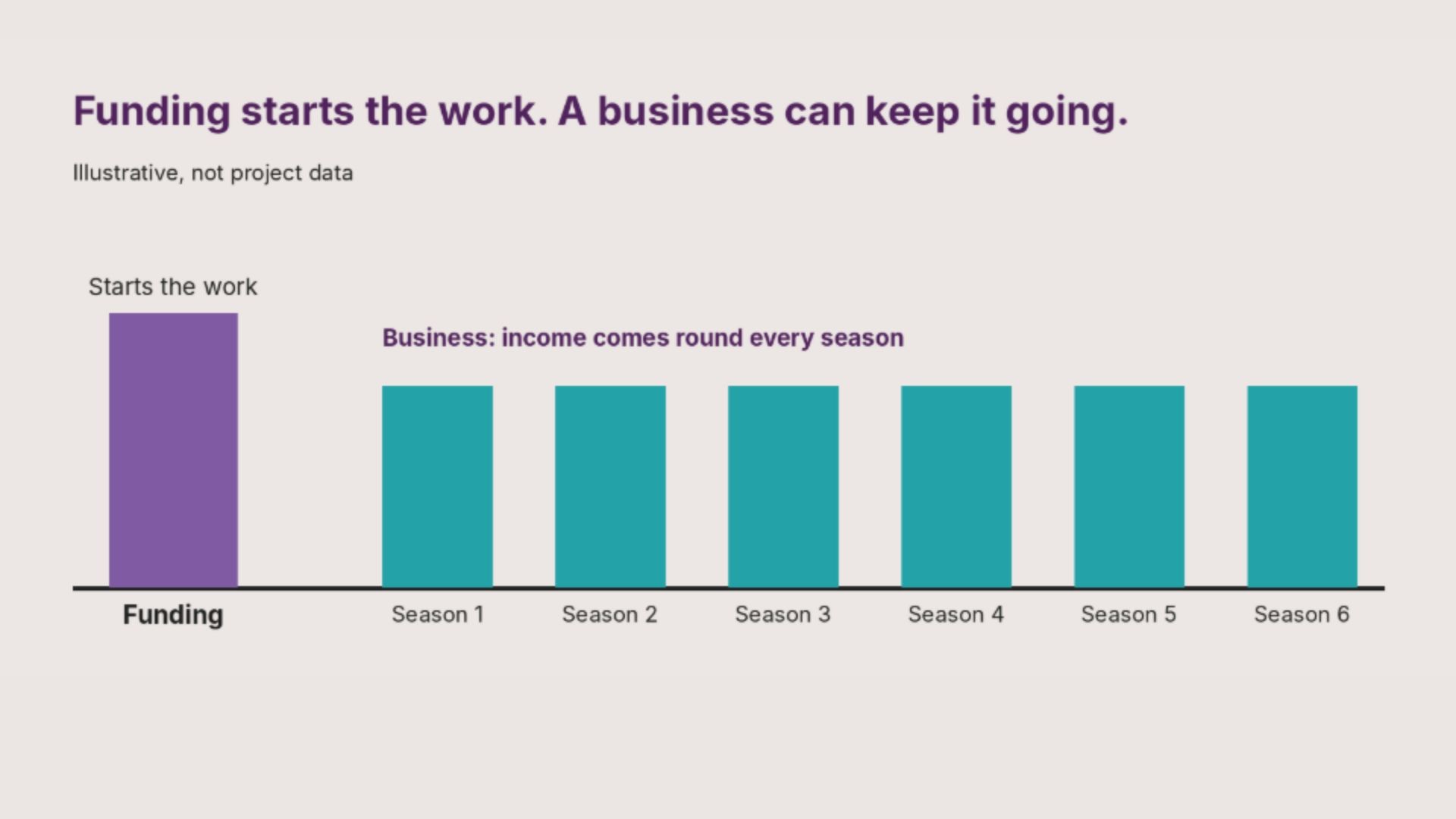
The APSC makes money from several sources: margins on produce, farm supply sales, mechanisation services and interest on farm credit. That income pays for running costs and growth. Farmers and communities have income they can count on each season, building on the investment that got the centre started.
That is why we ask funders and companies a second question alongside “how much can we donate?”: “Is there an opportunity to design whatever we fund so it continues to create income and jobs in ten years?”
When investment goes into strong enterprise support, the money keeps working. Farmers earn more. They hire labour and buy supplies. Transport operators, extension officers and suppliers all find work. Farmers also gain bargaining power, because they sell through organised groups to a structured market.
We started with the market
Before we planned anything, we tested demand. We asked what buyers wanted and what the communities were already interested in growing. We also ran a cost benefit analysis, because the factory had closed before and we wanted to be confident the investment would last.
We went to the communities and stayed
Three new team members moved into the local area for the whole project. They worked alongside the project leads.
Being close to the farmers meant we heard problems first-hand and acted on them quickly. It also built trust. When the factory was not yet running, we found other buyers so farmers could still sell their crops. They saw that we kept our word.
We worked with what was already there
We sought the buy-in of chiefs and local authorities from the beginning. We built on farmer groups and agricultural extension officers that already existed.
Farmers are not just a source of crops. They sit on advisory boards and elect cooperative leaders. Women play significant roles as out-growers and cooperative leaders.
We designed the whole system together
Finance, inputs, training, markets, governance and technology all came together in one plan. Fixing only one would have left the others to fail. Our partners joined as a consortium before delivery began, so the right expertise was in place from the start.
We planned for our exit from day one
Our aim was to build something that could carry on without us. Cooperatives took on governance. Farmers learned business skills as well as growing skills. The Asutifi Processing and Services Centre moved to an independent operation in 2024.
It took about four years to get there. We think that patience is part of the method.
Three things stand out.
We understood the barriers. Because we were on the ground, we saw the real problems on both sides. Farmers had no reliable buyer or fair price. The factory had no steady supply. Solving one without the other would not have worked.
The communities owned it. Farmers had a say in how the scheme ran. That brought accountability, and it gave them a reason to stay in the scheme.
The numbers worked. Between 2023 and 2024, ginger farmers' revenues rose 37% and chilli farmers used 380% more farm supplies. Farmers' profits rose by 19% to 36%. People stayed because it paid.
We did not get everything right. A disease outbreak in the first year hit production hard. Two farmers who used their own traditional methods did better than the others.
Local knowledge should shape the plan from the start. We now look for it early, and where it works, we write it down so others can use it.
If you fund or plan work in communities, a good question to ask is: is there a way to design solutions that keep working after we leave?
We believe part of the answer is enterprise, built around real demand and designed with the people who will run it and the wider community. It works best alongside the funding and programmes already doing great work.
If you are a funder, a CSR lead or part of a company planning to leave an area, let’s have a conversation.. Contact Shaun McLaughlin or Kelly Anyomitse


