
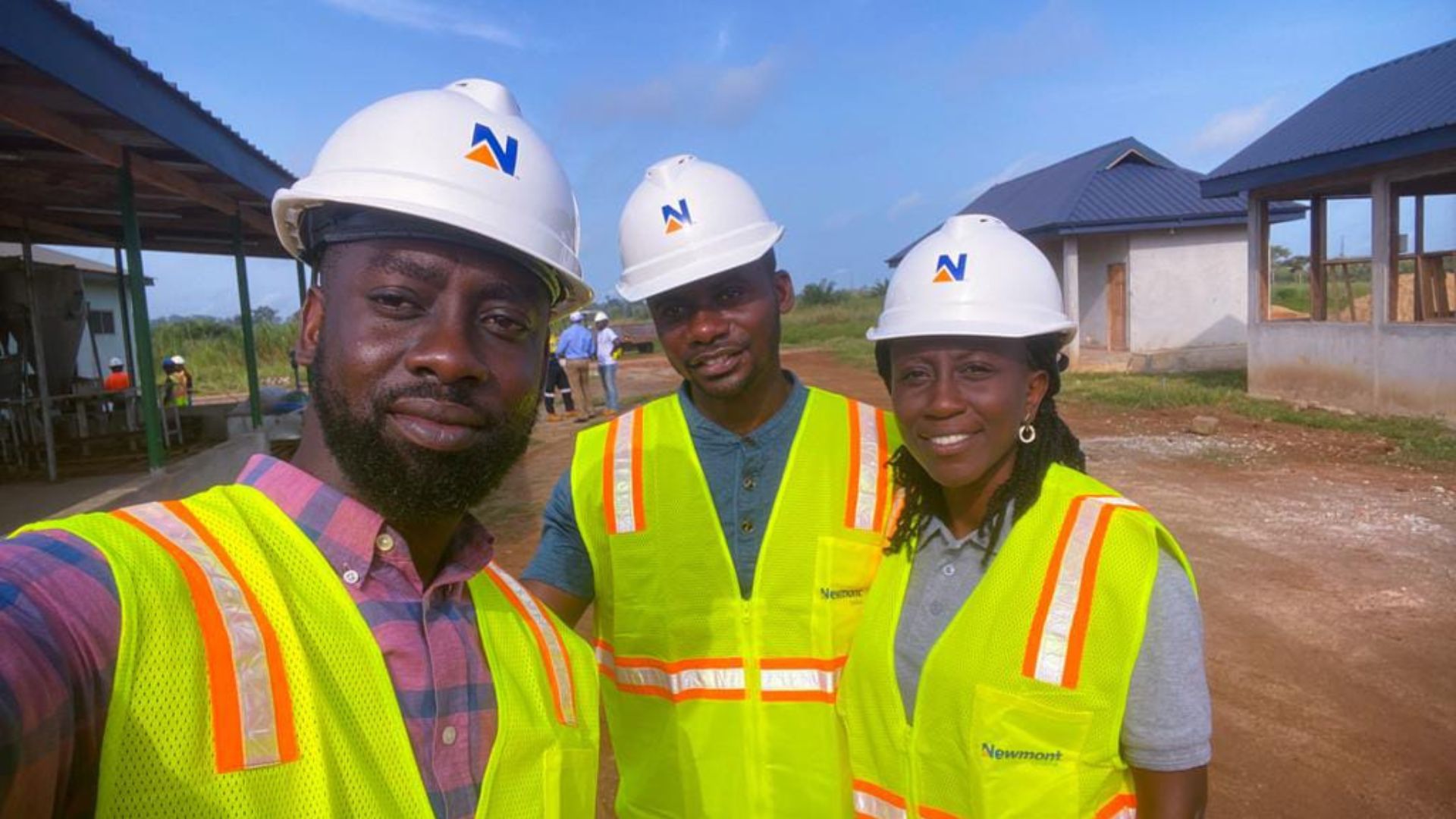
From extraction to ecosystem: how we supported 34 mining communities in Ghana to build a food business that lasts
Case study: the Asutifi Processing and Services Centre, Ghana
When a mine closes, the jobs, wages and local spending that came with it can go too. Communities can be left with fewer opportunities and lower incomes.
Newmont Africa wanted to leave a lasting positive legacy for the 34 mining communities around its operations in Ghana. It asked us to work with it on a long-term plan.
Together with our partners, we found a way forward in chilli and ginger. By 2025, the Asutifi Processing and Services Centre (APSC) was turning over more than US$1 million a year and running as an independent business.
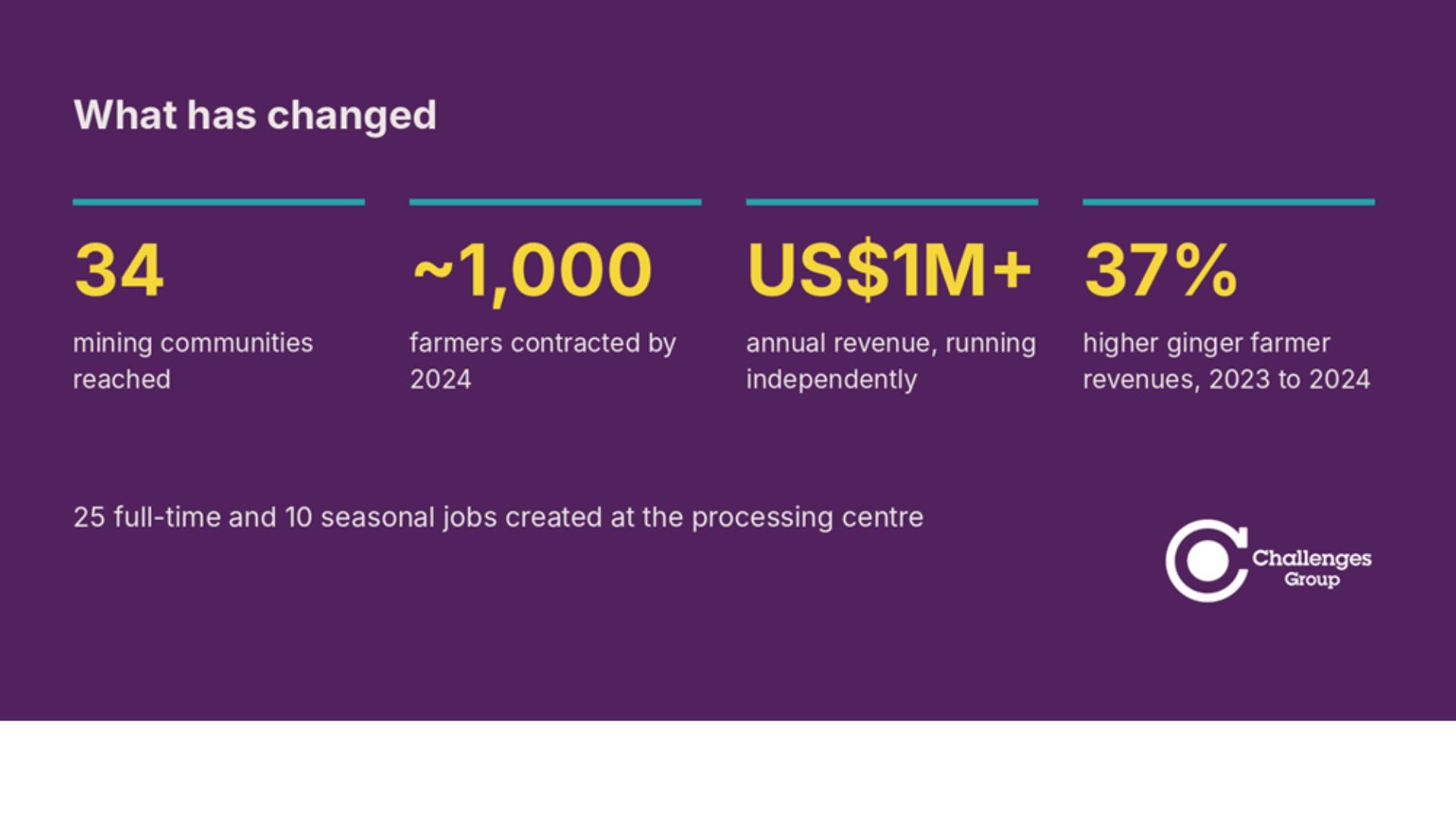
For the communities, that means about 1,000 farmers now have a reliable buyer for their crops, and average farmer incomes rose by about 15% in the first year. The centre has created 25 full-time and 10 seasonal jobs. And because the business earns its own money, that income can carry on beyond the life of the mine.
Here is what the problem was, what we did and what has changed.
Mining concentrates economic activity in one place for a limited time. When operations reduce or stop, that activity can disappear.
Newmont Africa wanted a long-term local economic diversification plan that would:
Corporate social responsibility programmes do valuable work for communities, and many are designed to run for a set period. Alongside that work, we saw a chance to build something that can keep going once the funding ends: a business that earns its own money.
Food was chosen because the communities already had the land and the farming skills. People also need food long after any one employer leaves, so a food business does not rely on a single employer.
There was also a building block: a processing factory, the Asutifi Processing and Services Centre. It opened in 2013, closed a few years later and stayed closed until our work began. Before restarting it, we needed to know why it had failed. Our research on the ground found problems on both sides of the market. Farmers and the factory each needed what the other was missing.
For farmers:
For the factory:
Our team at Challenges Ghana acted as research, design and delivery partner. We worked with Newmont Africa, Innovest Advisory, Injaro Investments, GIZ, Impact Food Hub and Axis Human Capital.
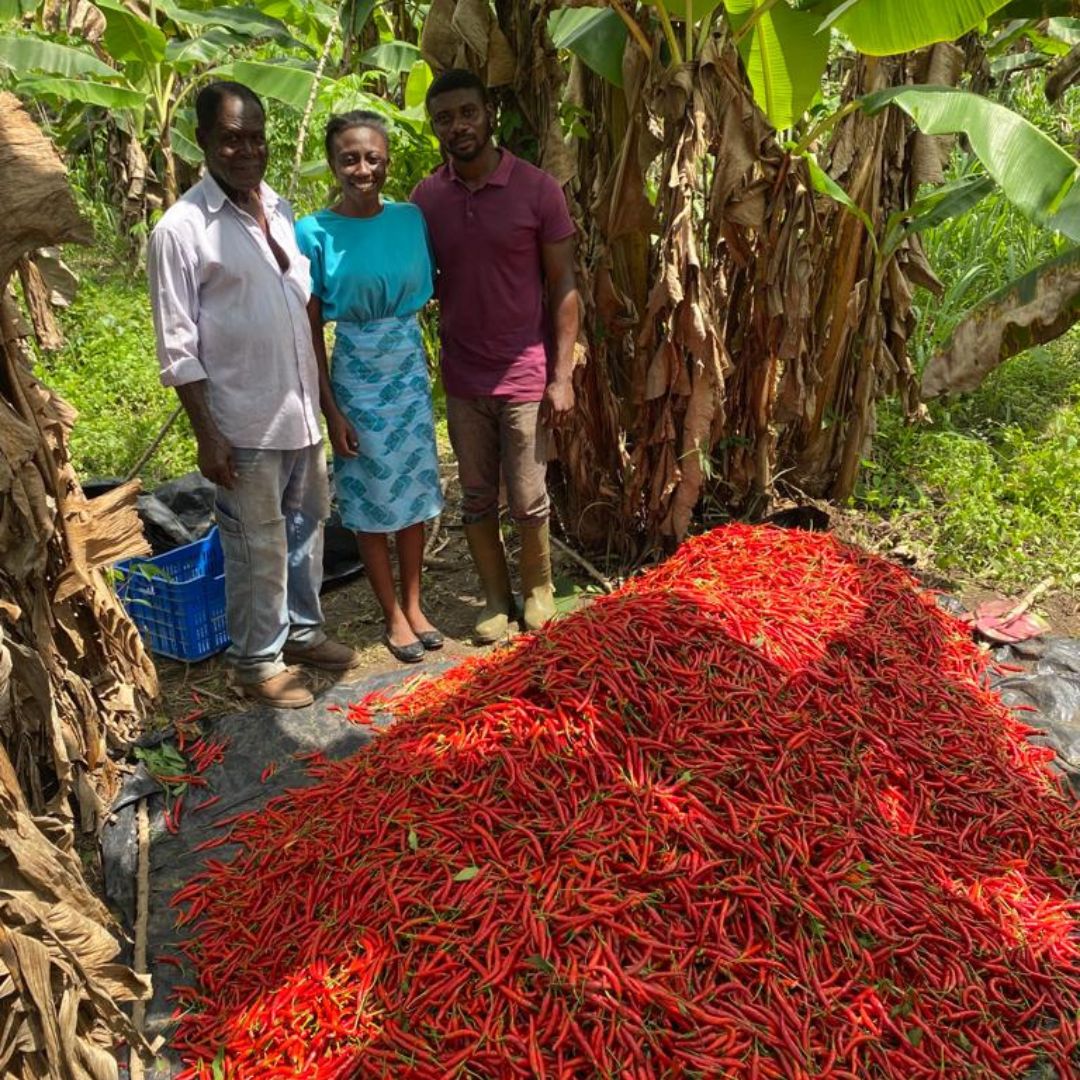
2018 to 2019: feasibility. We tested what the market wanted and what the communities were interested in growing. We also checked the costs and benefits, given the factory's history.
2020: investment plan. Funding was committed.
2021: consortium and design.We brought partners together and designed an out-grower scheme. This is the engine of the model. Farmers agree in advance to grow chilli or ginger for the processing centre, and the centre agrees to buy it. Farmers get a reliable buyer. The centre gets a steady supply.
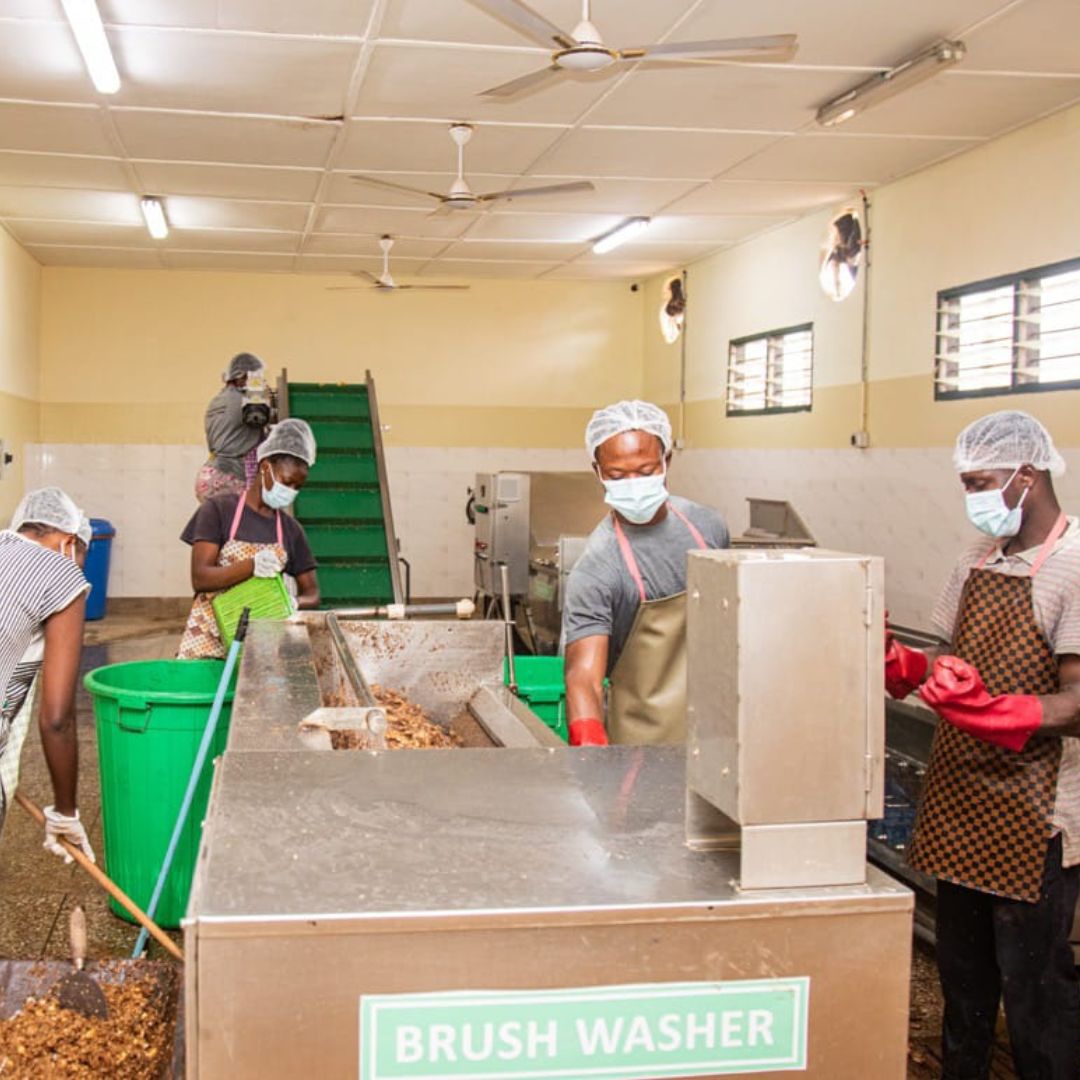
2021 to 2023: delivery. We put the scheme into practice and revamped the factory.
2024: handover. The business moved to independent operation. By 2025 it was turning over more than US$1 million a year.
• Guaranteed markets. Farmers had agreed buyers. When the factory was not yet fully running, we found other commercial buyers so that crops were still sold and trust held.
• Farm supplies and credit. Farmers could get quality, certified farming supplies, machinery services, credit to pay for farm labour and affordable loans. Farmers pay for these services, and that income helps the centre cover its costs. It also cut the money farmers needed upfront to grow their crops.
• Training and field support. Training covered good agroeconomic practices, business skills and group management. Regular field visits and weather information added to this.
• Farmer ownership. Cooperatives now have elected leaders and clear governance. Farmers sit on advisory boards.
• Better data. The MapMate platform tracks farms, production and traceability.
Three new team members moved into the local area for the whole project, alongside the project leads. Being there every day changed how well we understood the issues.
For the business
• Newmont reinvested US$4 million in the facility by December 2023, including new processing equipment.
• The APSC had annual revenues above US$1 million in 2025.
• It operates independently of Newmont's direct support and reinvests its profits in growth.
• It has created 25 full-time and 10 seasonal jobs.
For farmers and communities
• 599 farmers were contracted after the first year. By 2024 there were about 1,000 contracted chilli and ginger farmers in around 80 groups, across 34 communities.
• Average farmer incomes rose by about 15% in year one.
• Between 2023 and 2024, ginger farmers' revenues rose 37%. Farmers' profits rose by 19% to 36%.
• Chilli farmers used 380% more farm supplies and machinery, thanks to better access and credit.
• Temporary jobs on ginger farms rose 30%.
• 34 demonstration farms now show good practice and support learning between farmers.
The effect reaches beyond the farm. The scheme has created work for labour gangs, mechanisation providers, transport operators, extension officers and input suppliers. Women play significant roles as out-growers and cooperative leaders.
A disease outbreak in the first year hit production hard. Two farmers who used their own traditional growing methods did better than the others.
We now look for local knowledge from the start and make sure we share it with other farmers, so others can repeat it and benefit from the knowledge.
What this means for other mining companies
The question behind this project is simple: what keeps the local economy growing after the funding ends and the project team leaves?
If you are a mining company planning for closure, a funder or a government, start planning for your exit early. Think of building a local economy as a design job. It needs careful planning, like designing a product, to make sure it works. Plan the buyers, the money, the training, the local groups and the technology together, from the very start. If one is missing, the rest can fail. Planned together, your investment goes further.
It also takes patience. These results built up over about four years, not overnight.
The result is a business that belongs to its communities and keeps going. Newmont's investment is now an economic asset that will keep serving them beyond the life of the mine.
Contact Shaun McLaughlin or Kelly Anyomitse If you are planning for life after extraction, we would be glad to talk and work with you.


